Research
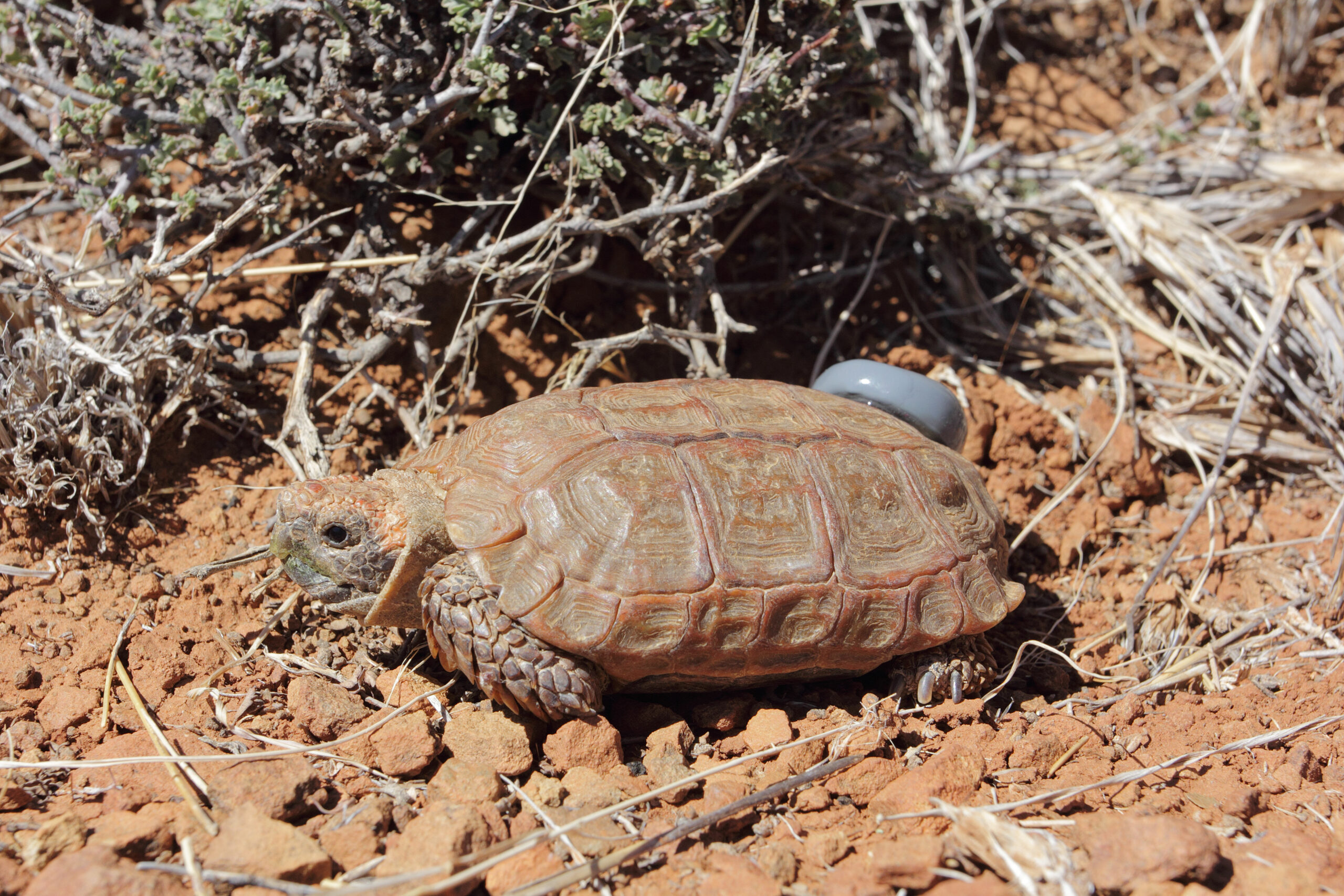
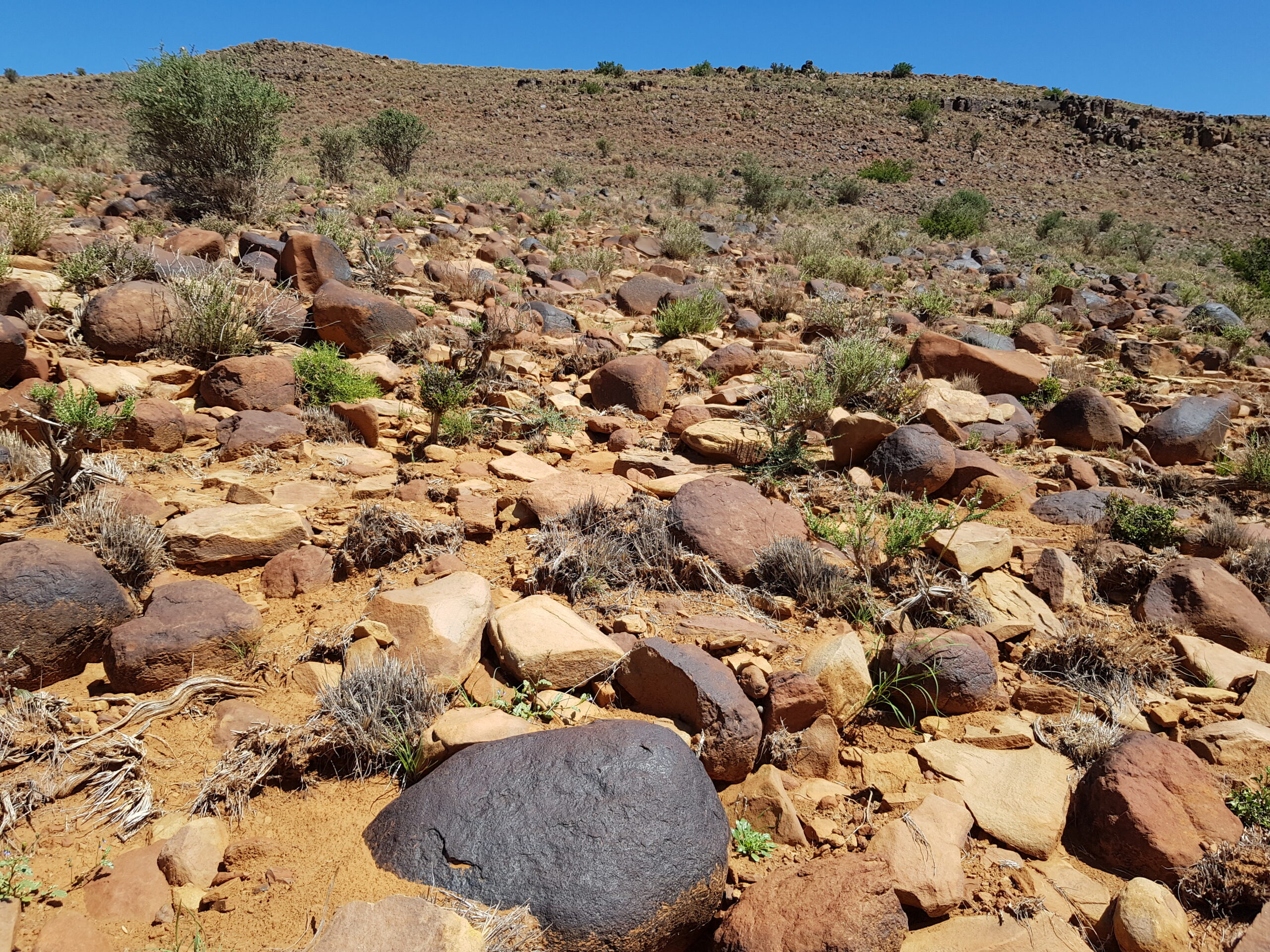
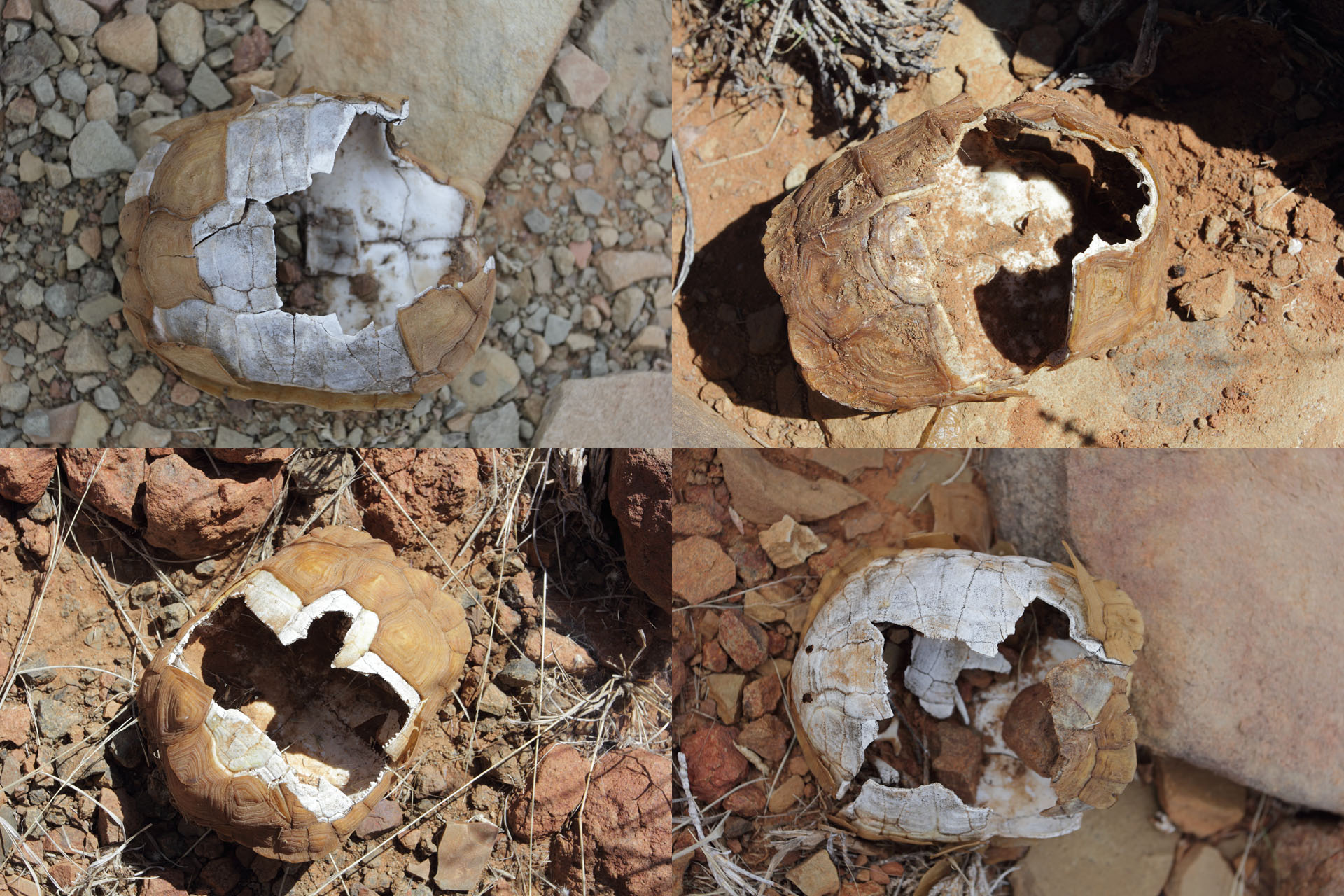
Field ecology of Karoo dwarf tortoises (Chersobius boulengeri)
Aim
Gathering information on the species’ ecology, given its decline and rarity of published ecological data. Gathered information should enable conservation.
Materials and methods:
GPS, mark-recapture, radiotelemetry, and radiography.
Timeframe
From 2005 to 2017, several intensive surveys were conducted to locate a population dense enough for a meaningful ecological study. Eventually, a population was found in February 2017. A population study started in 2018 and fieldwork
ran until 2022. The data processing and publishing continued until 2025.
Collaborators
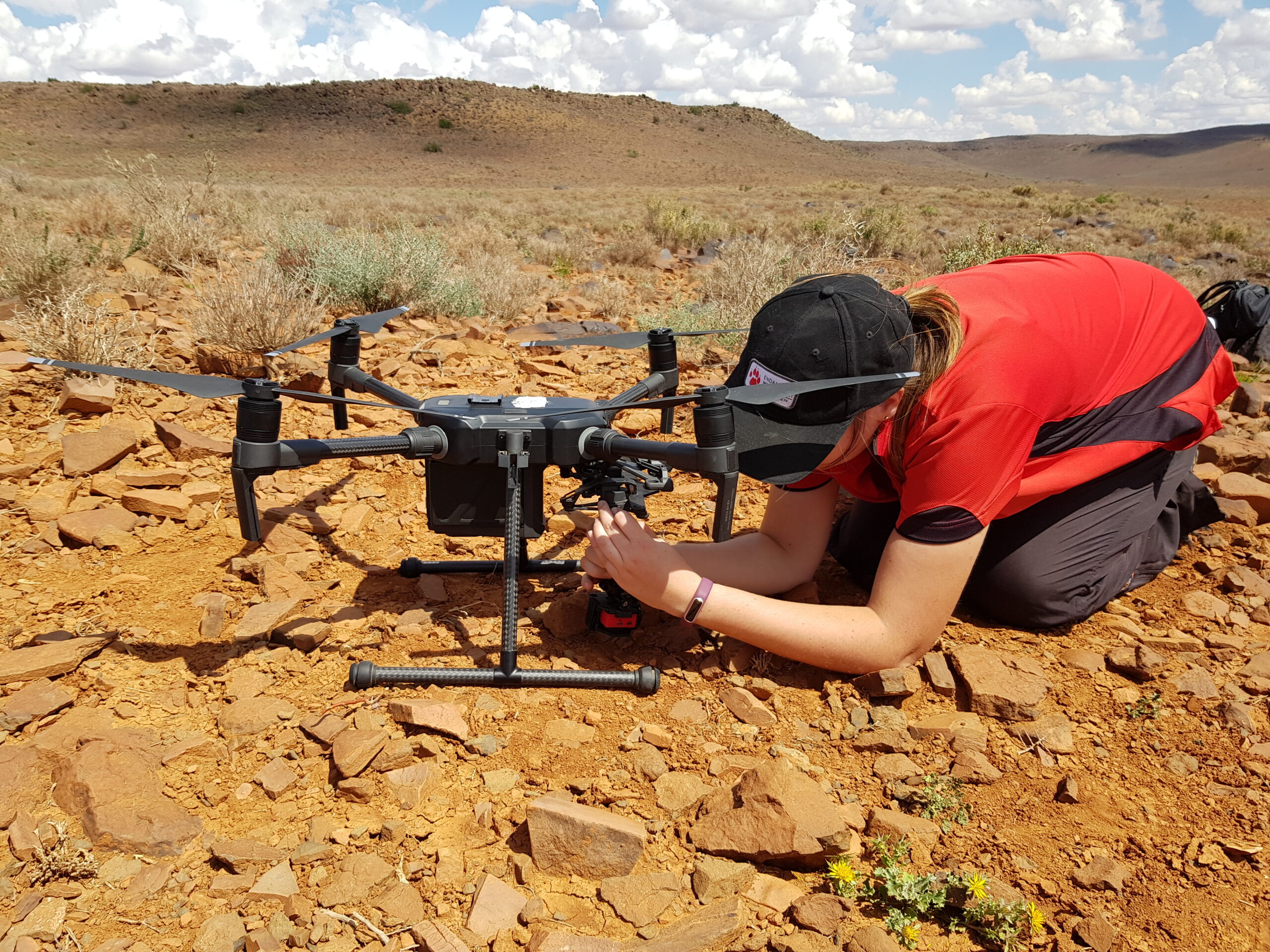
The study was a collaboration with the Chelonian Biodiversity and Conservation programme of the University of the Western Cape (South Africa). The study also collaborated with Utrecht University and Van Hall Larenstein University
of Applied Sciences (Netherlands) by providing internship positions for BSc and MSc students. In addition, the following field assistants participated: Sheryl
Gibbons, Courtney Hundermark, Andreas Iosifakis, Mark Klerks, On Lee Lau, Clara Lemyre, Esther Matthew, Olda Mudra, Sharon Pavoni, Susannah Peel, Bonnie Schumann, Sérgio Silva, Paul van Sloun, and Carlos Voogdt. The Abraham Esau hospital in Calvinia provided radiographs.
Sponsors
The following sponsors enabled the project: Knoxville Zoo, Turtle Conservation Fund and Conservation International, Holohil Systems, British Chelonia Group, Crocodile Zoo Prague, Turtle Survival Alliance Europe, Dutch-Belgian
Turtle and Tortoise Society, Pedak, Soek ‘n Slapie, Jan Barth, Kurt Engl, Sheryl Gibbons, Silja Heller, Brian Henen, Retha Hofmeyr, Courtney Hundermark, Lutz Jakob, Johann Klutz, Martijn
Kooijman, Matthias Kupferschmid, Koos and Coby Loehr, Frank van Loon, Marcel and Lydia Reck, Peter Sandmeier, Uwe Seidel, and Paul van Sloun.
Publications
- FREE DOWNLOAD Loehr, V.J.T. 2017. Testudinidae, Homopus boulengeri, Duerden 1906, Karoo Padloper. Reproduction. African Herp News 65: 17-19.
- FREE DOWNLOAD Loehr, V.J.T. 2018. Testudinidae, Chersobius boulengeri (Duerden, 1906), Karoo padloper. Reproduction. African Herp News 68: 37-39.
- Loehr, V.J.T. 2021. The Karoo dwarf tortoise (Chersobius boulengeri): field report on a vanishing species. Testudo 9: 20-36.
- Loehr, V.J.T., Keswick, T., Reijnders, M. and Zweers, I. 2021. High-level inactivity despite favorable environmental conditions in the rock-dwelling dwarf tortoise Chersobius boulengeri. Herpetologica 77: 232-238.
- FREE DOWNLOAD Loehr, V.J.T. and Keswick, T. 2022. Structure and projected decline of a Karoo dwarf tortoise population. Journal of Wildlife Management 86: e22159.
- Loehr, V.J.T. and Keswick, T. 2022. Witnessing a population collapse: field research in South Africa reveals the perils closing in on the only documented population of endangered Karoo dwarf tortoises. The Tortoise 3: 118-123.
- FREE DOWNLOAD Loehr, V.J.T. 2023. Habitat use by the rock-dwelling Karoo dwarf tortoise, Chersobius boulengeri. Ichthyology & Herpetology 111: 360-367.
- Loehr, V.J.T. and Keswick, T. 2023. Shell dimensions in a population of Karoo dwarf tortoises, Chersobius boulengeri. Chelonian Conservation and Biology 22: 119-122.
- FREE DOWNLOAD Loehr, V.J.T., Keswick, T. and Barten, N. 2023. Karoo dwarf tortoises (Chersobius boulengeri) prefer and disperse doll’s roses (Hermannia spp.). Journal of Arid Environments 219: 105094.
- FREE DOWNLOAD Loehr, V.J.T. 2024. Bimodal nesting season in Karoo dwarf tortoises (Chersobius boulengeri). Wildlife Biology: e01380.
Media
- Learn, J.R. 2022. JWM: Crows contribute to Karoo dwarf tortoise decline. The Wildlife Society. Https://wildlife.org.
- Mowbray, S. 2024. Study: Tiny tortoise may play large role in South Africa’s Karoo landscape. Mongabay. Https://news.mongabay.com.
- Radio interview Islam Radio (South Africa)
- Radio interview Cape Talk Radio (South Africa)
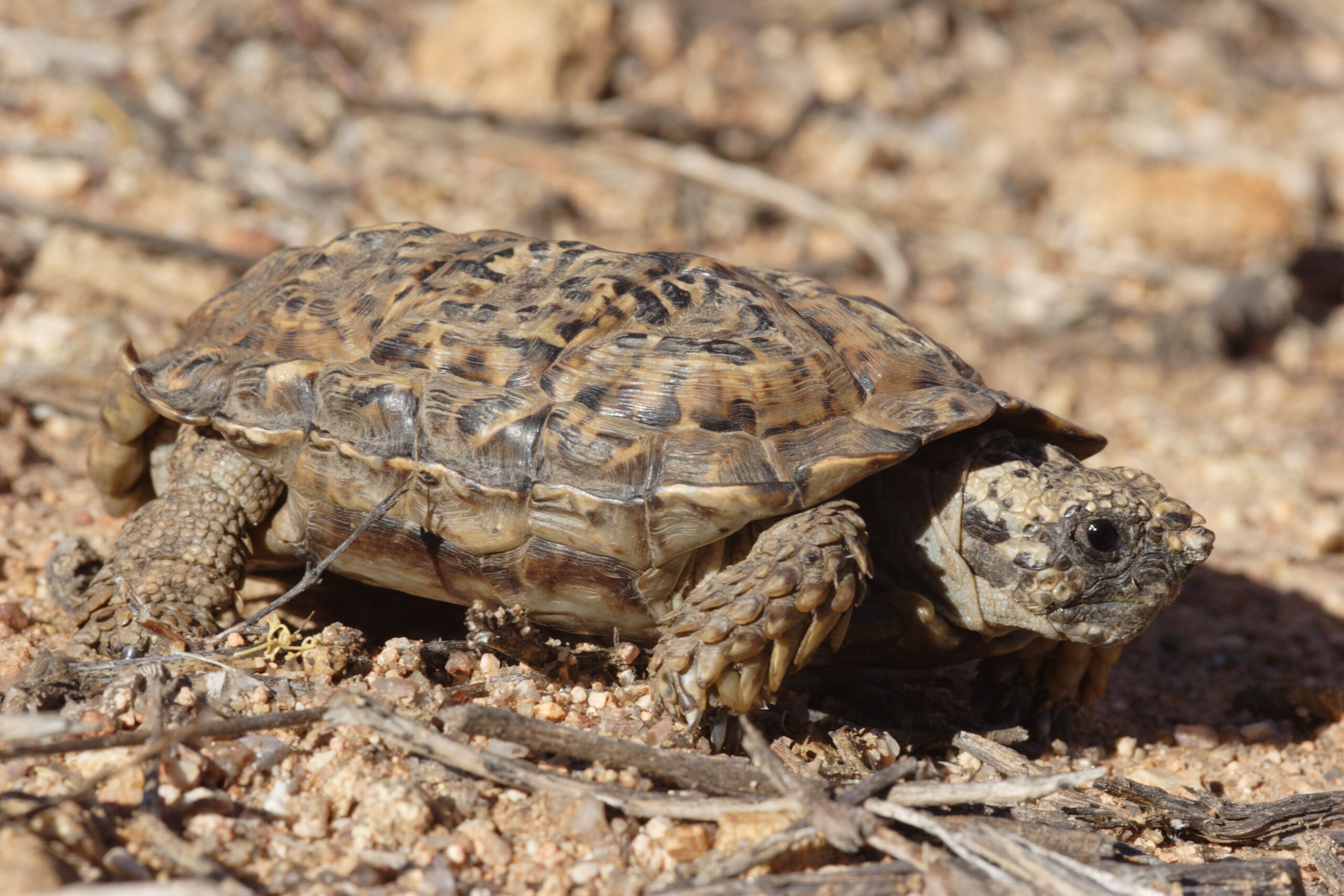
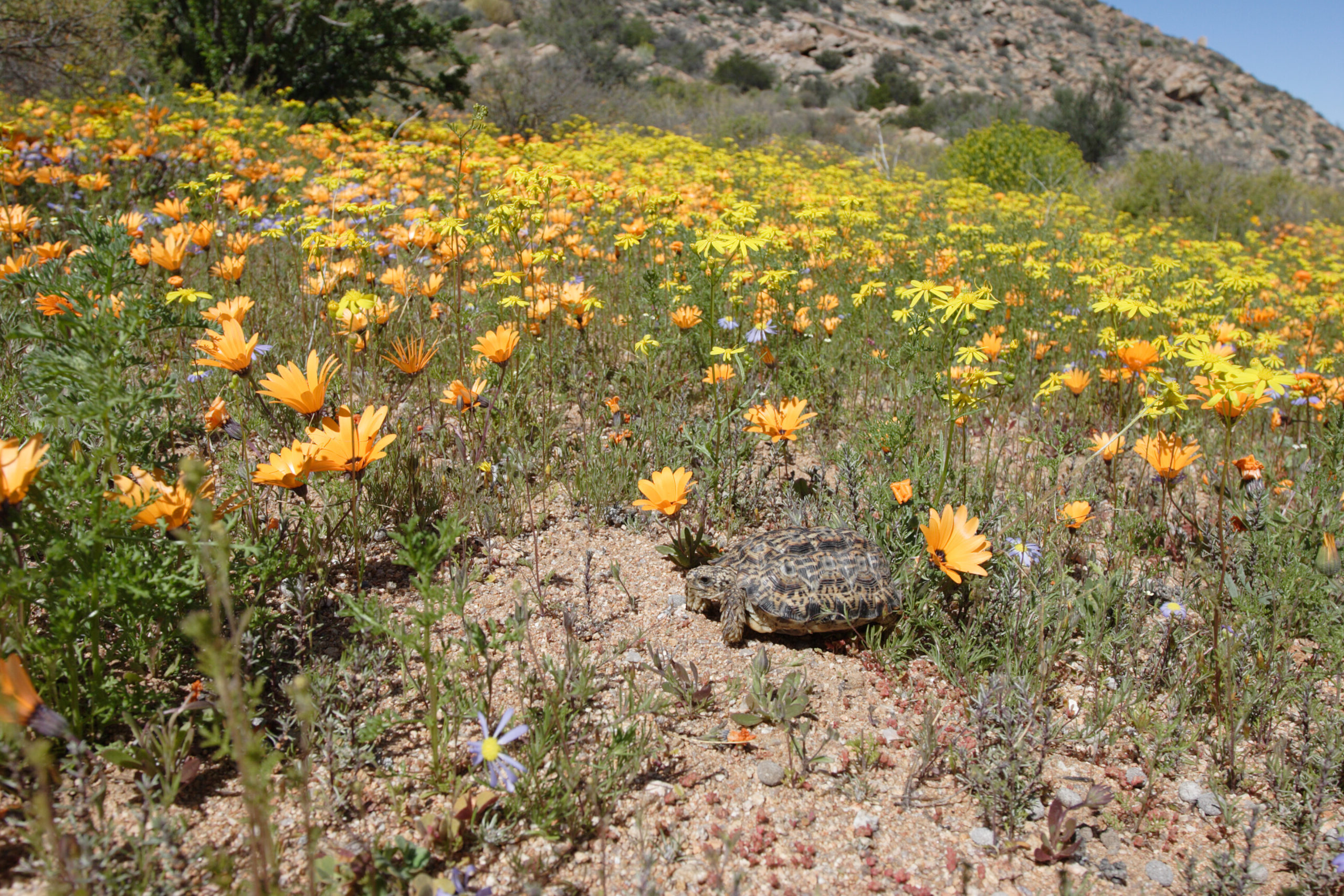
Field ecology of speckled dwarf tortoises (Chersobius signatus)
Aim
Determining baseline information on population size, population dynamics, morphology, growth, natural diet, tick infestations, and reproduction, for a population in the northern part of the species’ distribuiton range.
Materials and methods
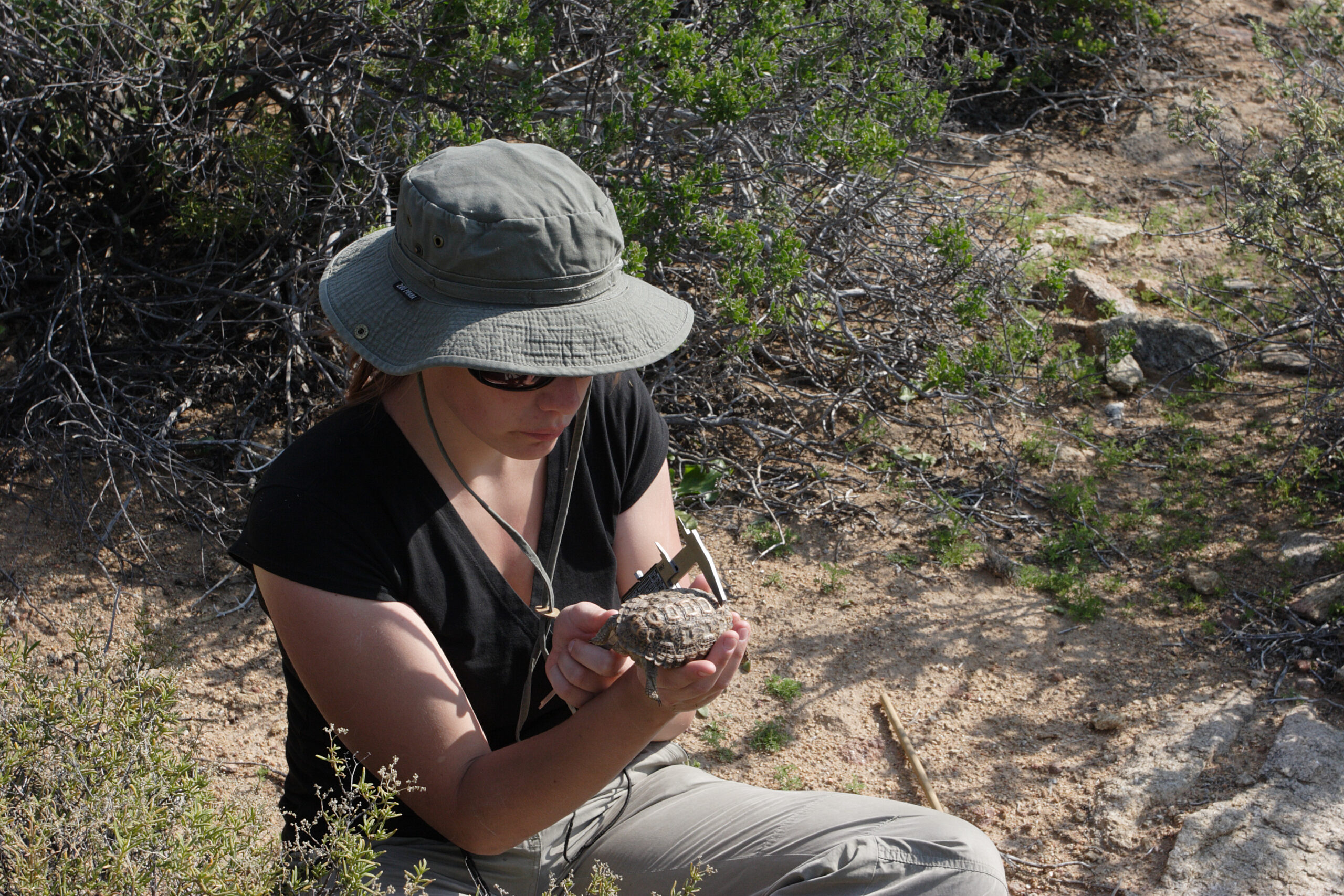
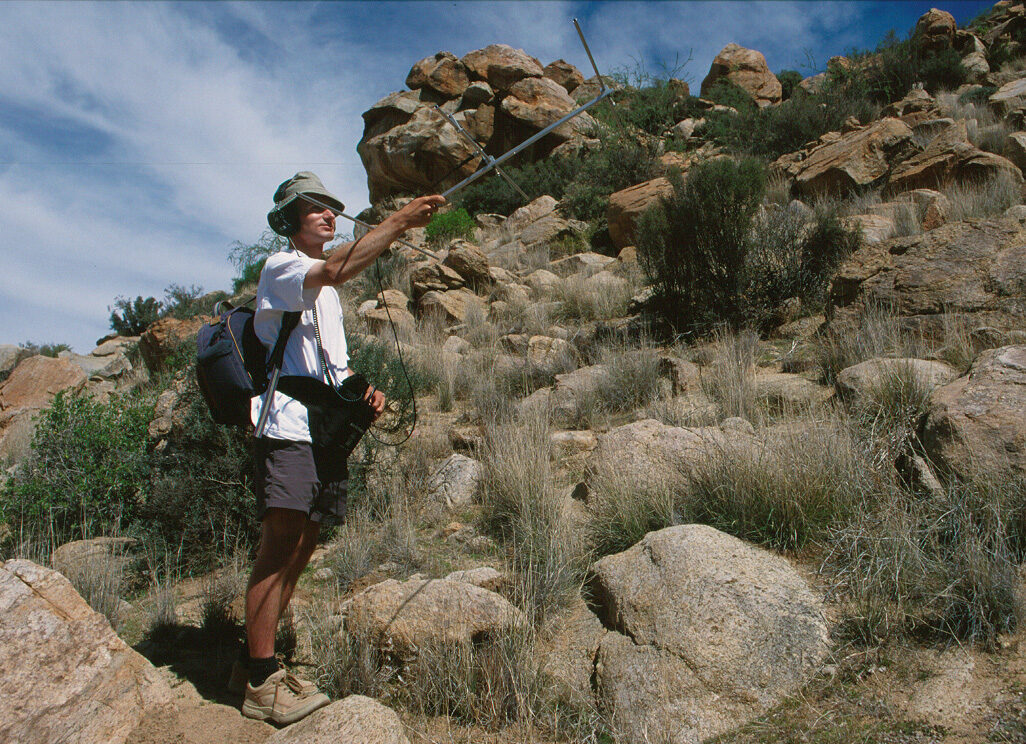
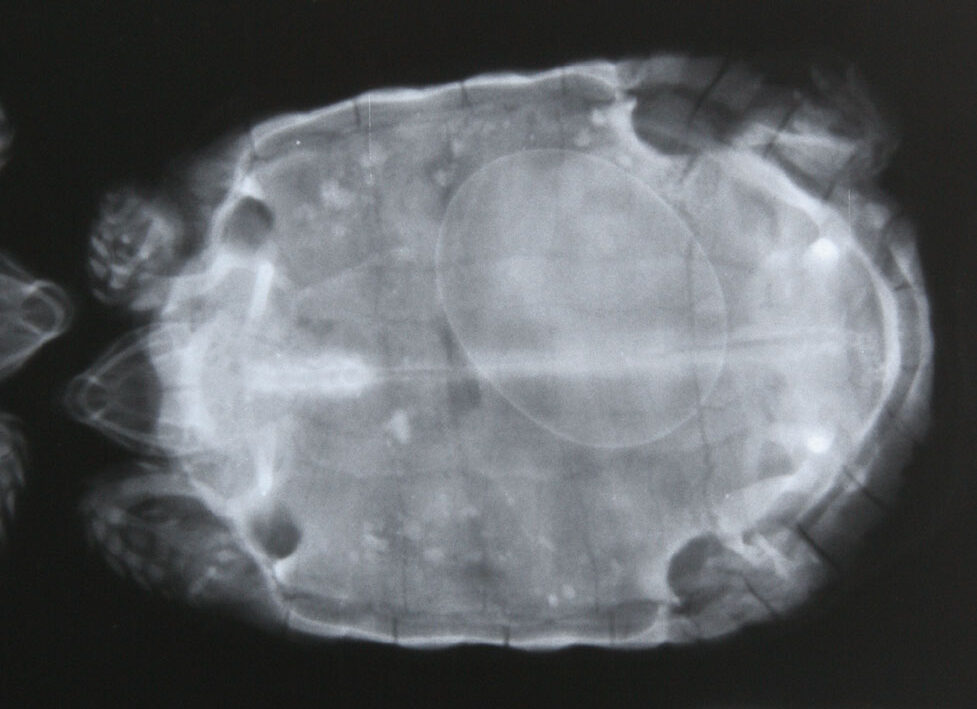
GPS, mark-recapture, radiotelemetry, thread-trailing, radiography, and ultrasonography.
Timeframe
The study started in 2000, and fieldwork was completed in 2004. The data processing and publishing took until 2007, and was completed with a PhD dissertation in 2008. Subsequently, a follow-up study was started in 2012 that ran until
2015, with data processing and publishing continuing until 2020.
Collaborators
Although the work started as a short-time project, it was eventually incorporated in the Chelonian Biodiversity and Conservation programme of the University of the Western Cape (South Africa). Retha Hofmeyr and Brian Henen supervised
the work, and were actively involved in fieldwork. In addition, the following field assistants participated: Patrik Abramsson, Mats Blohm, Tamara Harris-Smith, Chris Hobson, Janne Karlsson, Mark Klerks, Linn Lagerström, Tom Licitra,
Frank van Loon, Peter van Putten, Jacobo Reyes, Ina Schettler, Fabian Schmidt, Sebastian Scholz, and Marsha van Tilborghs. The Dr. van Niekerk hospital in Springbok provided radiographs.
Sponsors
The following sponsors enabled the project: Chelonian Research Foundation (Linnaeus Fund), National Research Foundation (South
Africa), University of the Western Cape, Tortoise Trust, Dutch Foundation for the Advancement of Herpetology, Schildkrötenfreunde Österreich, Dutch Turtle and Tortoise Society, World Chelonian Trust, Basel Zoo, University of Colima,
Seneca Park Zoo, AnTech instruments, Barbour Threads, CamCode/ StatsDirect, Cellpack, Microscoop Service Rob Engelhard, Mulder-Hardenberg, Röbke Agenturen, Blohm
family, Jaco Bruekers, Erol Engin, Michael Hebbeler, Chris Hobson, Gerrit Hofstra, Janne Karlsson, Mark Klerks, Martijn Kooijman, Tom Licitra, Koos and Coby Loehr, Frank van Loon, Bill Sawey, Ina Schettler, Julian Schlömer, Fabian
Schmidt, Sebastian Scholz, Paul van Sloun, Rob Verhoeks, Sabine and Thomas Vinke, and Lars and Petra Wolfs.
Publications
- Loehr, V.J.T. 2002. Diet of the Namaqualand speckled padloper, Homopus signatus signatus, in early spring. African Journal of Herpetology 51: 47-55.
- Loehr, V.J.T. 2002. Population characteristics and activity patterns of the Namaqualand speckled padloper (Homopus signatus signatus) in the early spring. Journal of Herpetology 36: 378-389.
- FREE DOWNLOAD
Loehr, V.J.T. 2003. Annual temperature fluctuation in the natural habitat of the Namaqualand speckled padloper, Homopus signatus signatus. Radiata 12: 25-27. Published simultaneously in German in Radiata.
- FREE DOWNLOAD Loehr, V.J.T. 2004. A new thread-trailing method for small tortoises in densely structured habitats. Turtle and Tortoise Newsletter 2004(7): 13-14.
- Loehr, V.J.T. 2004. Growth of the Namaqualand speckled padloper, Homopus signatus signatus (Reptilia: Testudinidae). African Zoology 39: 309-313.
- Loehr, V.J.T., Henen, B.T. and Hofmeyr, M.D. 2004. Reproduction of the smallest tortoise, the Namaqualand speckled padloper, Homopus signatus signatus. Herpetologica 60: 444-454.
- Hofmeyr, M.D., Henen, B.T. and Loehr, V.J.T. 2005. Overcoming environmental and morphological constraints: egg size and pelvic kinesis in the smallest tortoise, Homopus signatus. Canadian Journal of Zoology 83: 1343-1352.
- Loehr, V.J.T. 2005. Preliminary results of a long-term field study on the Namaqualand speckled padloper, Homopus signatus signatus . Emys 12: 4-17.
- Loehr, V.J.T. 2006. Natural diet of the Namaqualand speckled padloper (Homopus signatus signatus). Chelonian Conservation and Biology 5: 149-152.
- Loehr, V.J.T., Henen, B.T. and Hofmeyr, M.D. 2006. Shell characteristics and sexual dimorphism in the Namaqualand speckled padloper, Homopus signatus signatus. African Journal of Herpetology 55: 1-11.
- Loehr, V.J.T., Henen, B.T. and Hofmeyr, M.D. 2006. Tick infestations in the Namaqualand speckled padloper, Homopus signatus signatus (Gmelin, 1789). African Zoology 41: 170-177.
- Loehr, V.J.T., Hofmeyr, M.D. and Henen, B.T. 2007. Growing and shrinking in the smallest tortoise, Homopus signatus signatus: the importance of rain. Oecologia 153: 479-488.
- Loehr, V.J.T., Hofmeyr, M.D. and Henen, B.T. 2007. Annual variation in the body condition of a small, arid zone tortoise, Homopus signatus signatus. Journal of Arid Environments 71: 337-349.
- Loehr, V.J.T. 2008. Annual variation of the relative humidity in a rock crevice in the natural habitat of the Namaqualand speckled padloper, Homopus signatus signatus. Radiata 17: 30-32.
- FREE DOWNLOAD Loehr, V.J.T. 2008. Homopus signatus signatus (Gmelin, 1789), Namaqualand speckled padloper. Natural oviposition and incubation. African Herp News 44: 9-10.
- FREE DOWNLOAD Loehr, V.J.T. 2008. The ecology of the world’s smallest tortoise, Homopus signatus signatus: effects of rainfall. PhD dissertation. University of the Western Cape, South Africa.
- Loehr, V.J.T., Hofmeyr, M.D. and Henen, B.T. 2009. Small and sensitive to drought: consequences of aridification to the conservation of Homopus signatus signatus. African Journal of Herpetology 58: 116-125.
- Loehr, V.J.T. 2010. Structure and dynamics of a Namaqualand speckled tortoise (Homopus signatus signatus) population over 5 years of rainfall variation. Chelonian Conservation and Biology 9: 223-230.
- Loehr, V.J.T., Henen, B.T. and Hofmeyr, M.D. 2011. Reproductive responses to rainfall in the Namaqualand speckled tortoise. Copeia 2011: 278-284.
- Loehr, V.J.T. 2015. Small vernal home ranges in the Namaqualand speckled tortoise, Homopus signatus. Journal of Herpetology 49: 447-451.
- Loehr, V.J.T. 2016. Wide variation in carapacial scute patterns in a natural population of speckled tortoises, Homopus signatus. African Journal of Herpetology 65: 47-54.
- Loehr, V.J.T. 2017. Unexpected decline in a population of speckled tortoises. Journal of Wildlife Management 81: 470-476.
- Loehr, V.J.T., Voogdt, C.G.P. and Nolan, D. 2019. Ultrastructure of eggshells from wild and captive speckled dwarf tortoises, Chersobius signatus. Herpetologica 75: 63-68.
- Hofmeyr, M.D., Henen, B.T. and Loehr, V.J.T. 2020. Reproductive investments of a small, arid zone tortoise Chersobius signatus: follicle and egg development. Acta Zoologica 101: 39-50.
Field ecology of greater dwarf tortoises (Homopus femoralis)
Aim
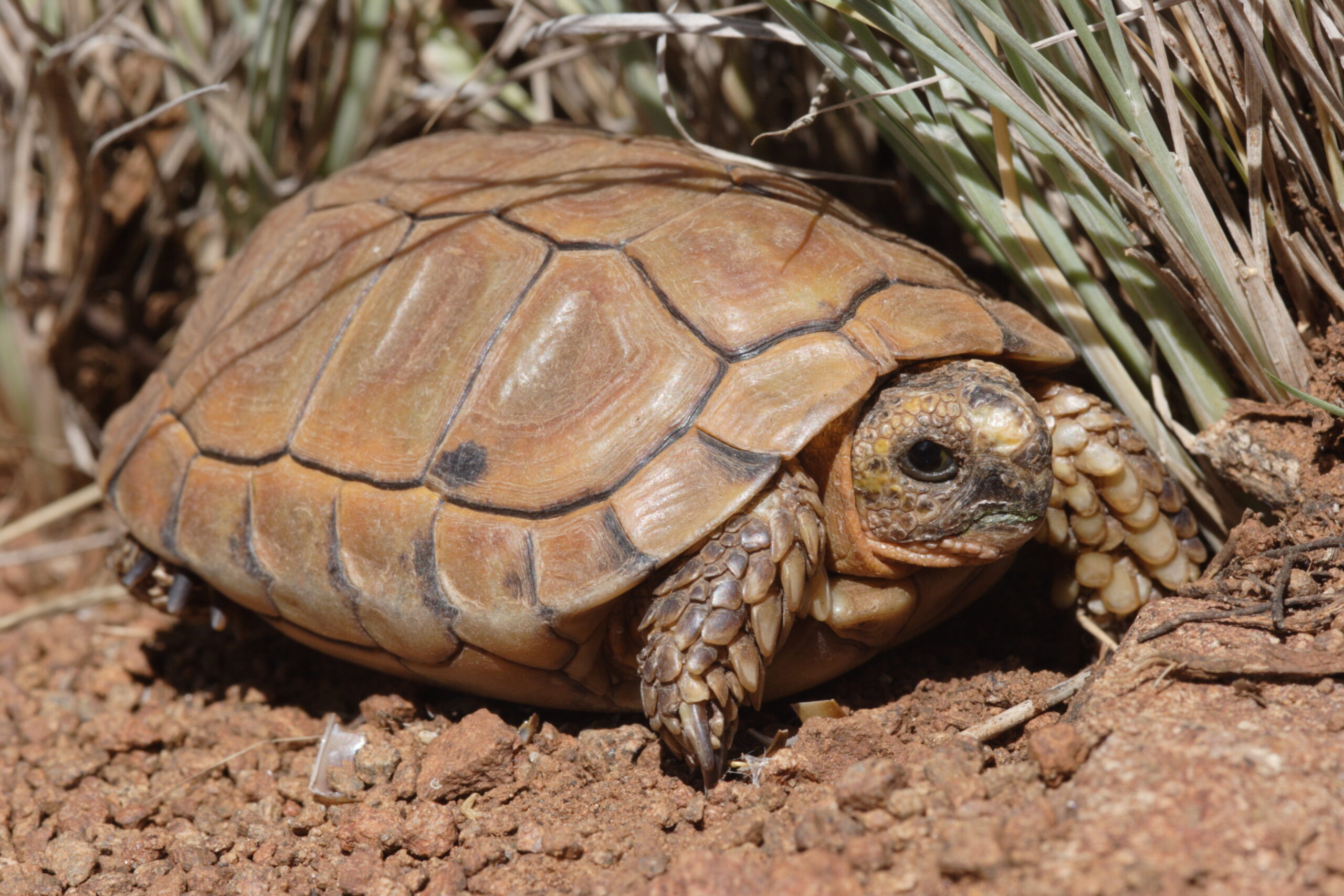
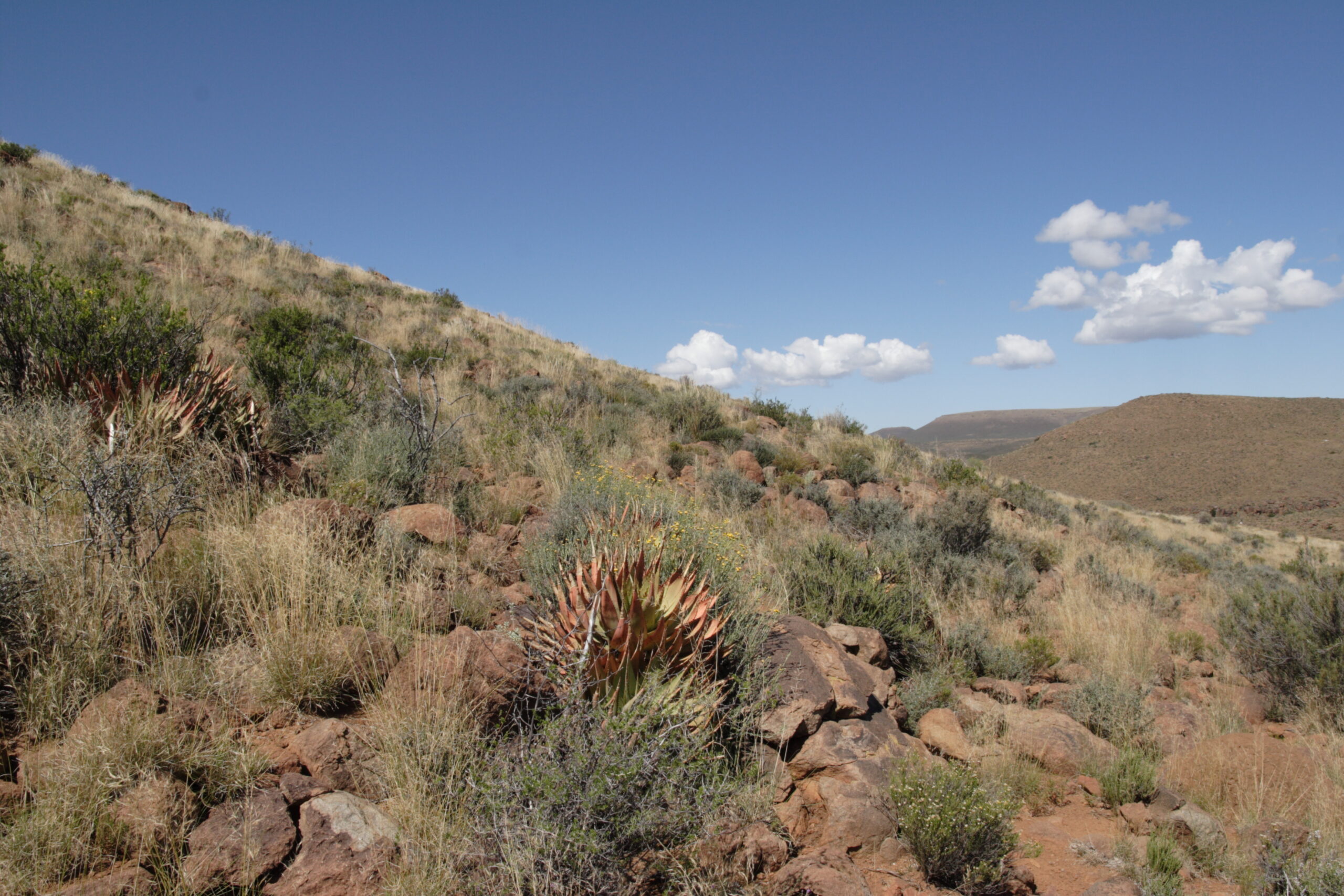
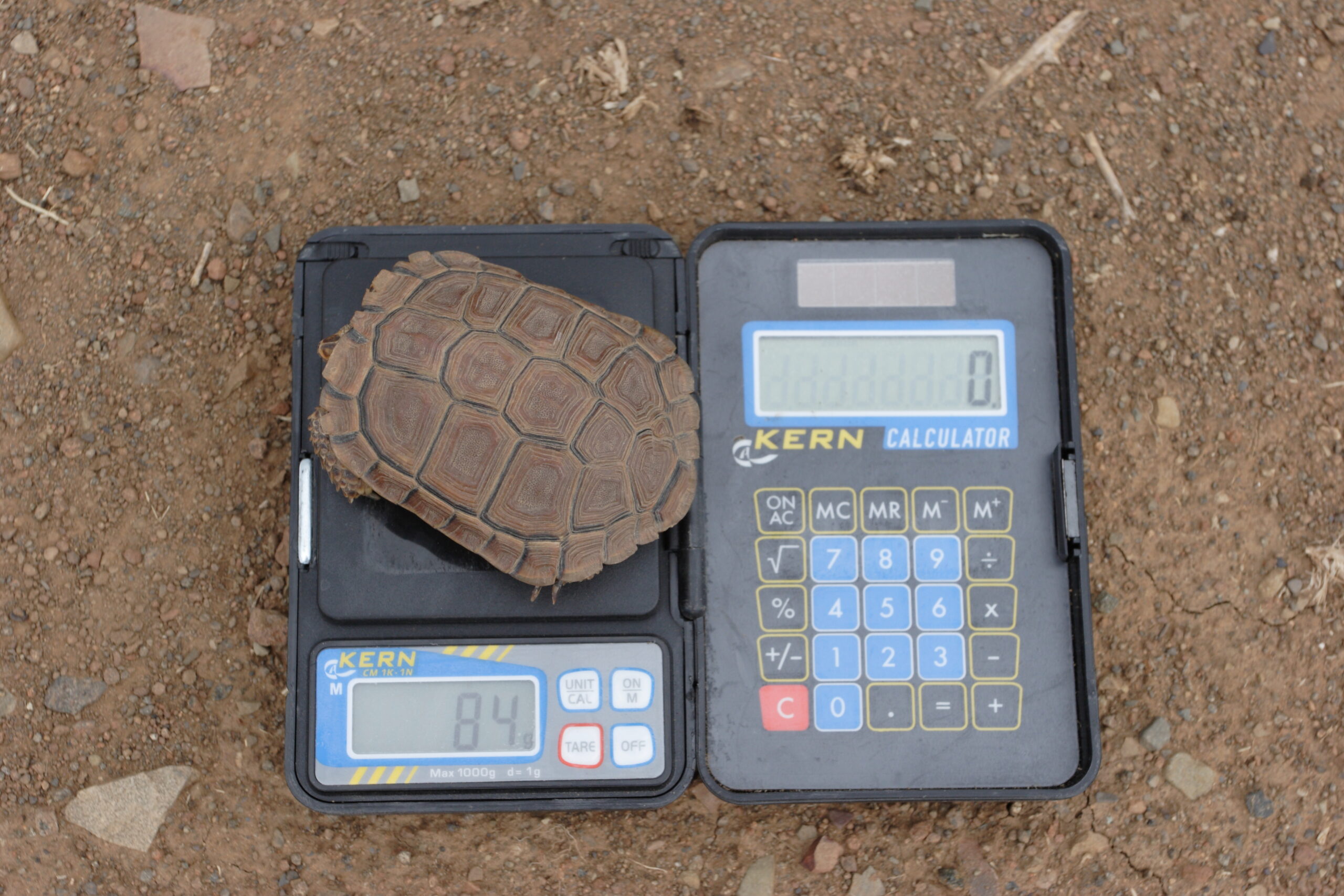
Determining baseline information on population size, population dynamics, morphology, growth, natural diet, and reproduction, for a population in the Karoo.
Materials and methods
GPS, mark-recapture, radiotelemetry, radiography, and ultrasonography.
Timeframe
The study started in 2006 with the selection of a study site, and fieldwork ended in 2011. Papers were published until 2013.
Collaborators
This project was a collaboration with Retha Hofmeyr’s Chelonian Biodiversity and Conservation programme at the University of the Western Cape (South Africa). In addition, Francois Busson and Siebren Kupurus assisted in the field. Beaufort-West
Hospital provided radiographs.
Publications
- FREE DOWNLOAD Kuperus, S. and Loehr, V.J.T. 2009. Homopus femoralis Boulenger, 1888, greater padloper. Nesting. African Herp News 49: 10-11.
- Loehr, V.J.T. 2012. Activity of the greater padloper (Homopus femoralis, Testudinidae), in relation to rainfall. African Zoology 47: 294-300.
- FREE DOWNLOAD Loehr, V.J.T. 2012. Homopus femoralis Boulenger, 1888, greater padloper. Diet. African Herp News 57: 9-10.
- Loehr, V.J.T. 2012. Road mortality in the greater padloper, Homopus femoralis (Testudinidae). Chelonian Conservation and Biology 11: 226-229.
- FREE DOWNLOAD Loehr, V.J.T. 2013. Homopus femoralis (greater padloper). Reproduction. Herpetological Review 44: 304-305.
Thermoregulation in speckled dwarf tortoises (Chersobius signatus)
Aim
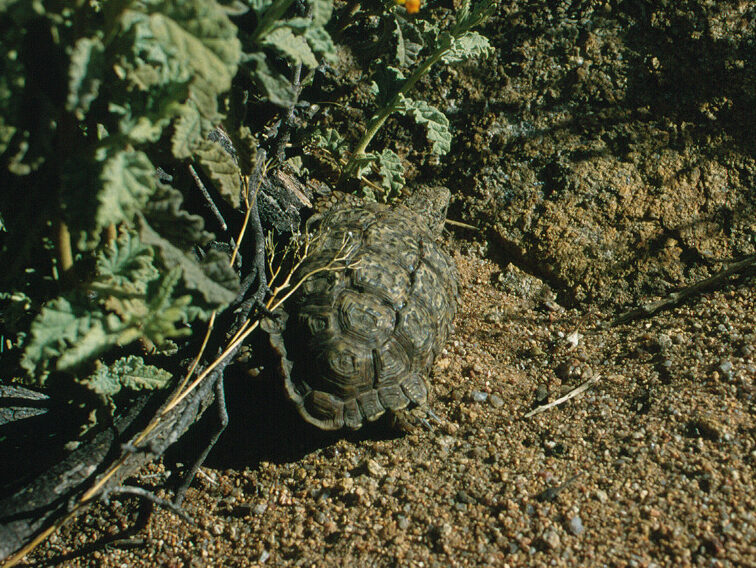
Determining if speckled dwarf tortoises are challenged by low environmental temperatures at times when food is available (i.e., winter and early spring), and assessing potential vulnerabilities for anthropogenic impact.
Materials and methods
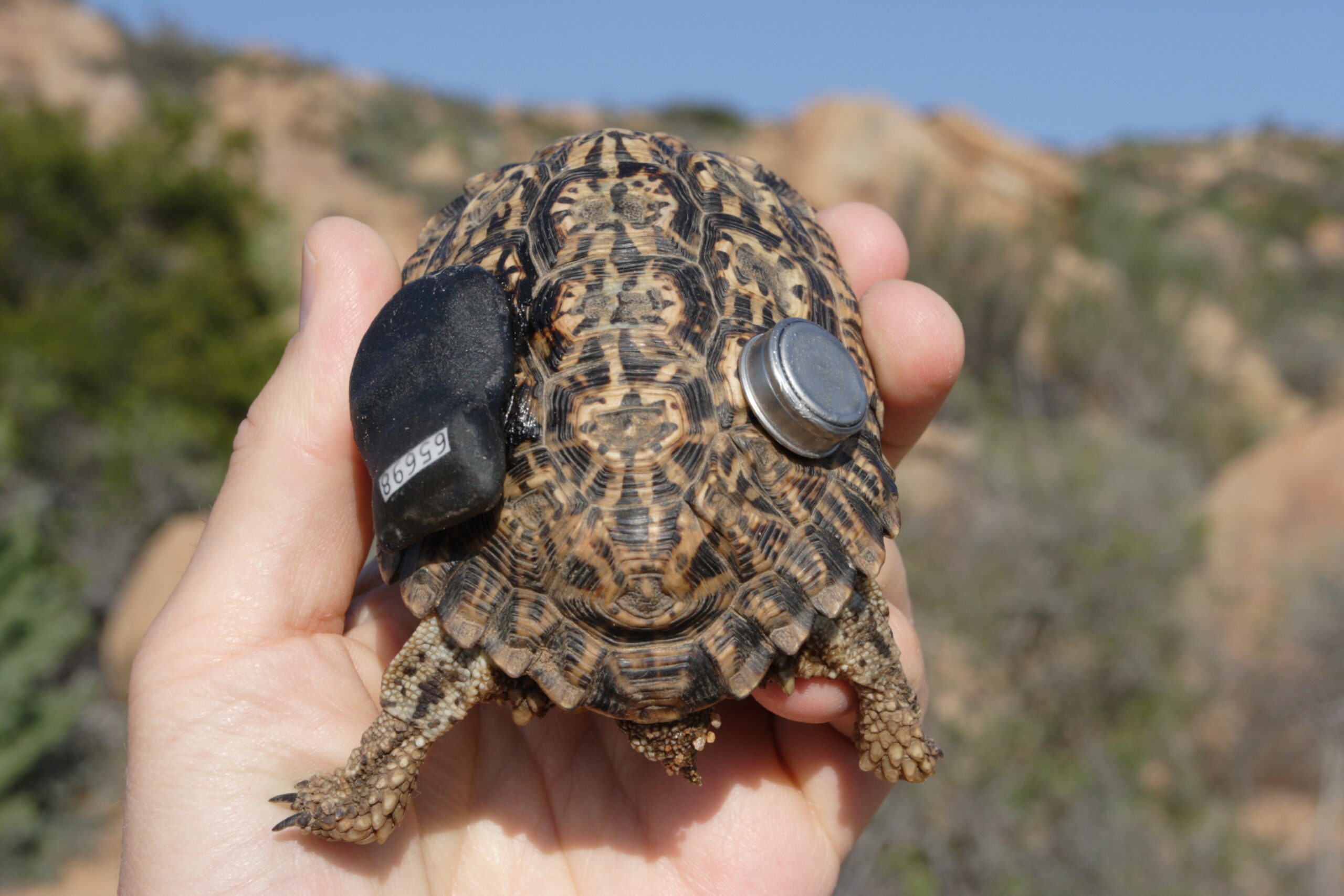
Radiotelemetry, iButtons, and tortoise models.
Timeframe
The study started in 2012, and would finalise in 2014. However, it was extended to 2015 as a result of low tortoise activity in 2014. The data processing and publishing started in 2014 and ended in 2018.
Collaborators
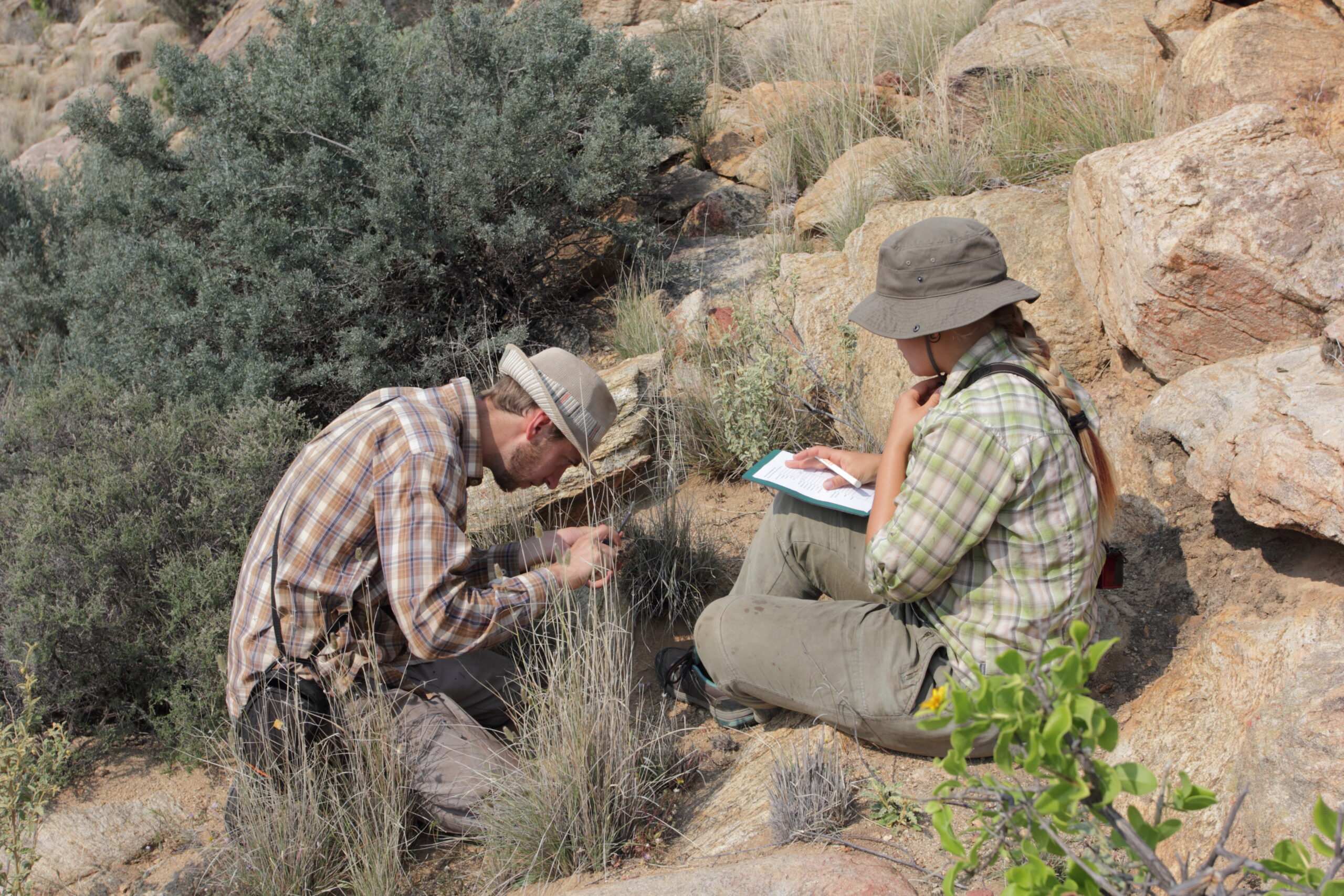
Two BSc students from the Van Hall-Larenstein University of Applied Sciences (Netherlands) measured individual time budgets. The study was a collaboration with the Chelonian Biodiversity and Conservation programme of the University
of the Western Cape (South Africa). In addition, the following field assistants participated: Michael Hebbeler, Mikolaj Kazmierczak, Martijn Kooijman, Olda Mudra, Fabian Schmidt, Sérgio Silva, Sabine Sommer, and Susanne Sommer.
Publications
- Loehr, V.J.T. 2012. High body temperatures in an arid, winter-rainfall environment: thermal biology of the smallest tortoise. Journal of Arid Environments 82: 123-129.
- FREE DOWNLOAD Loehr, V.J.T., Stark, T., Weterings, M. and Kuipers, H. 2015. Overcoming low environmental temperatures in the primary feeding season: low-level activity and long basking in the tortoise Homopus signatus. Amphibia-Reptilia 36: 207-214.
- Loehr, V.J.T. 2018. Thermoregulatory challenges in the habitat of the world’s smallest tortoise, Chersobius signatus. Journal of Thermal Biology 71: 62-68.